“snake repellent” products promise a quick fix
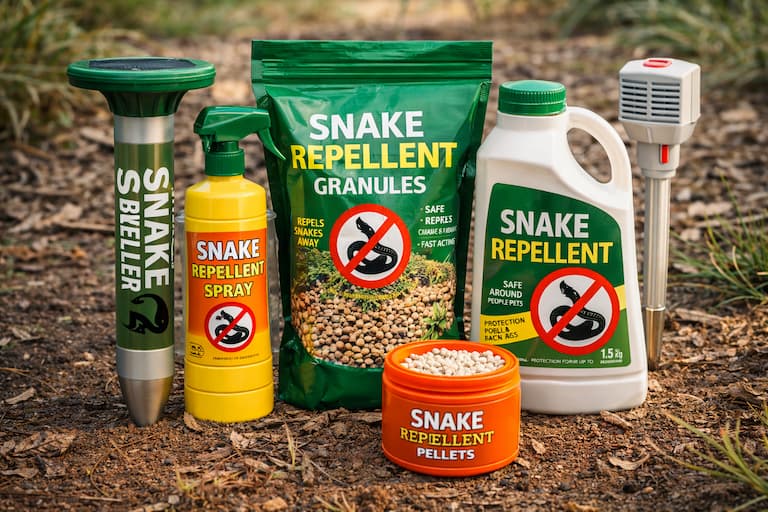
For many people, the idea of a snake in the yard is unsettling, and “snake repellent” products promise a quick fix. But do they actually work? The short answer: most repellents have limited, inconsistent results. The long answer is more useful—understanding why snakes are on your property, and what reliably discourages them, is far more effective than relying on sprays or gadgets.
This guide separates marketing claims from practical reality and outlines what actually reduces snake encounters in Brisbane North.
Why Snakes Show Up in the First Place
Snakes aren’t wandering around looking for humans. They’re following food, shelter, and stable temperatures. If your property offers rodents, frogs, bird nests, or dense cover, snakes may pass through. Understanding that pattern matters more than any product label. For a deeper look, read Why Snakes Enter Homes.
The Main Types of Repellents (and Their Limits)
1) Chemical Repellents
These usually come as sprays, granules, or pellets with ingredients like sulfur, naphthalene, or essential oils. The challenge is persistence: rain, irrigation, and wind reduce their potency quickly. Snakes also have variable sensitivity depending on species and environmental conditions. Some people report short‑term success, others see no difference.
Bottom line: chemical repellents might create a temporary barrier in very specific conditions, but they are not reliable on their own.
2) Electronic or Ultrasonic Devices
These devices claim to emit vibrations or sound that snakes dislike. Evidence for consistent effectiveness is weak. Soil type, device placement, and snake behavior all influence results. Many professional handlers report little observable impact.
Bottom line: electronic devices are not a substitute for real prevention.
3) Natural Remedies and Plants
Plants like marigold, lemongrass, or wormwood are commonly suggested as snake deterrents. While some plants have strong scents, there’s no solid evidence they repel snakes in a real‑world yard.
Bottom line: nice for the garden, but not a reliable snake solution.
What Actually Works (Consistently)
If you want measurable results, focus on habitat management. The steps below are proven to reduce encounters because they remove what snakes need to stay on your property.
1) Remove Shelter
Keep lawns trimmed, reduce leaf litter, tidy wood piles, and clear clutter. Snakes move under cover—open space makes them less comfortable.
2) Reduce Food Sources
Control rodents, secure pet food, and keep compost and rubbish sealed. Snakes follow prey, so cutting down prey reduces snake visits. If you want the full strategy, see Snake Proof Your Home.
3) Seal Entry Points
Snakes can squeeze through small gaps. Mesh vents, door sweeps, and sealing gaps around pipes are often more effective than any spray.
4) Use Targeted Fencing
Snake‑proof fencing can work for small areas like dog runs or play zones, but it must be installed correctly—smooth surface, no gaps, and buried edges. It’s not always cost‑effective for a whole property.
When to Call a Professional
If a snake is inside your home or in a high‑risk area (near kids, pets, or busy outdoor spaces), don’t rely on repellents. Call a licensed catcher. For Brisbane North, Emergency Snake Removal explains what to do and how response works.
If you’re weighing costs or want to understand what’s included in a callout, Snake Removal Cost breaks it down clearly.
Common Myths About Repellents
- “One product will solve it forever.” No single product can offset an attractive habitat.
- “Repellents drive snakes far away.” At best, they may cause temporary avoidance.
- “Natural remedies are guaranteed.” Most are anecdotal rather than evidence‑based.
TLDR
Snake repellents are mostly inconsistent. The most reliable “repellent” is a tidy, sealed, low‑prey property. Remove shelter, control rodents, and block entry points. Use repellents only as a short‑term supplement—not a solution. If a snake is in a risky area, call a professional instead of relying on sprays or gadgets.