Coastal Taipan in Brisbane: Identification & Emergency Removal
The coastal taipan (Oxyuranus scutellatus) is Australia's third most venomous land snake and one of the most dangerous reptiles on the planet. While primarily found in tropical and subtropical regions of northern and eastern Australia, coastal taipans are occasionally encountered on Brisbane's outer northern fringe, particularly where semi-rural properties border grassland, cane fields, and open woodland. If you encounter a snake you suspect may be a coastal taipan, do not approach it under any circumstances. Contact a licensed Brisbane North snake catcher immediately for safe, professional removal.
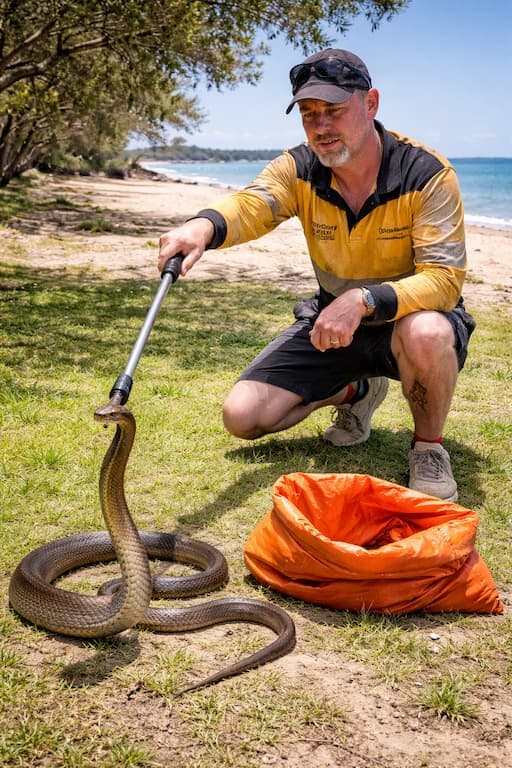
How to Identify a Coastal Taipan
Correct identification is critical when dealing with any snake, but especially so with the coastal taipan. Key identification features include:
- Colour: Uniform light brown to dark brown, sometimes with an olive or coppery tinge. The colouration tends to be darker in winter and lighter during summer months.
- Head: Large, rectangular-shaped head that is clearly distinct from the neck. This is one of the most reliable distinguishing features. The face and snout are noticeably pale or cream-coloured.
- Size: Adults typically range from 1.5 to 2 metres, though large specimens can exceed 2.5 metres. This makes them considerably larger than most eastern brown snakes.
- Build: Heavy, muscular body with a robust frame, particularly through the mid-section.
- Belly: Cream to pale yellow, often with scattered orange or pink flecks.
- Eyes: Large, round eyes with a reddish-brown iris.
The coastal taipan is sometimes confused with the eastern brown snake, which is far more common in the Brisbane region. However, the taipan's larger head, heavier build, pale snout, and greater overall length help distinguish it. If you are uncertain about any snake's identity, treat it as dangerous and use our snake identification tool or call a professional.
Habitat and Behaviour
Coastal taipans prefer open grassland, sugar cane fields, woodland margins, and areas with abundant ground cover where their primary prey thrives. They are active hunters that rely on speed and acute eyesight to locate and capture food. Their diet consists primarily of rats, mice, and other small mammals, which is why they are occasionally drawn to rural properties and farmland where rodent populations are high.
Taipans are diurnal, meaning they are most active during daylight hours. However, during the peak of summer heat, they may shift their activity to the cooler early morning and late afternoon periods. They are among the fastest snakes in Australia and are capable of striking with extraordinary speed and precision.
Unlike some defensive species that may bluff or deliver dry bites, a disturbed coastal taipan is likely to strike multiple times in rapid succession, injecting a large volume of venom with each bite. This behaviour makes them exceptionally dangerous if cornered or surprised at close range. They will generally flee if given an escape route, so the most important rule is to never block a taipan's path of retreat.
Danger Level: Extremely Venomous
The coastal taipan possesses the third most toxic venom of any land snake in the world. Its venom is a potent cocktail that attacks the body on multiple fronts:
- Neurotoxicity: Causes progressive paralysis, affecting breathing and motor function.
- Coagulopathy: Disrupts the blood's ability to clot, leading to internal and external bleeding.
- Myotoxicity: Causes breakdown of muscle tissue, which can result in kidney damage.
A single bite from a coastal taipan can deliver enough venom to be fatal without prompt medical treatment. Multiple bites, which are common with this species, compound the danger significantly. Before the development of specific antivenom, the fatality rate from confirmed coastal taipan bites was extremely high.
If bitten: This is a life-threatening emergency. Call 000 immediately. Apply a pressure immobilisation bandage to the entire bitten limb, keep the patient as still and calm as possible, and do not wash the bite site or attempt to suck out venom. For detailed first aid guidance, see our guide on treating snake bites in Australia.
Where Coastal Taipans Are Found in Brisbane North
Coastal taipans are not common within suburban Brisbane. Their presence in the region is largely confined to the outer northern suburbs where development meets open country. Areas where sightings have been reported include:
- North Lakes: The outer fringe of North Lakes, particularly where new development borders remnant grassland and former agricultural land. Rodent activity around construction sites can attract taipans into the area.
- Burpengary: Semi-rural properties and grassland corridors provide suitable habitat. Properties backing onto open paddocks or acreage are most likely to encounter this species.
- Dakabin: Bushland edges and areas of open ground adjacent to residential zones create potential habitat overlap. Taipans may pass through these transitional areas while hunting.
It is worth noting that coastal taipans are far less common than eastern brown snakes in the greater Brisbane area. Most snake encounters in Brisbane North involve browns, carpet pythons, or tree snakes. However, the extreme danger posed by a taipan means that any suspected sighting should be taken seriously and reported to a 24/7 snake catcher.
What To Do If You See a Coastal Taipan
If you encounter a snake you believe may be a coastal taipan, follow these steps:
- Retreat immediately. Back away slowly and put as much distance between yourself and the snake as possible. Do not run, as sudden movement can provoke a defensive response.
- Do not approach or attempt to handle the snake under any circumstances. This applies even if you believe it may be dead. Taipans can strike reflexively.
- Evacuate the area. Move all people and pets well away from the snake's location.
- Keep visual contact from a safe distance if possible, so you can direct the snake catcher to the right spot.
- Call for professional emergency snake removal immediately.
Coastal Taipan FAQ
How common are taipans in Brisbane?
Coastal taipans are uncommon within suburban Brisbane. They are occasionally found on the outer northern fringe, particularly around semi-rural areas such as Burpengary, Dakabin, and the outskirts of North Lakes where grassland and former cane fields border residential development. Most snake encounters in Brisbane involve eastern brown snakes, carpet pythons, or common tree snakes.
How do I tell a taipan from a brown snake?
The coastal taipan is generally larger and heavier-bodied than the eastern brown snake. Look for the taipan's distinctive rectangular head shape, which is clearly distinct from the neck, and its pale or cream-coloured face and snout. Eastern browns tend to be slimmer with a less pronounced head. However, positive identification in the field is difficult and risky. If you are unsure, do not approach the snake and call a licensed snake catcher for professional identification.
What should I do if bitten by a taipan?
A coastal taipan bite is a medical emergency that requires immediate action. Call 000 straight away. Apply a pressure immobilisation bandage to the entire bitten limb, keep the patient completely still, and do not wash the bite site. Do not attempt to catch or kill the snake. Taipan-specific antivenom is available at hospitals, and early treatment dramatically improves outcomes. Read our full snake bite first aid guide for detailed instructions.
Are taipans aggressive?
Coastal taipans are not inherently aggressive. Like most Australian snakes, they prefer to avoid confrontation and will retreat if given a clear escape route. However, they are extremely alert and fast-moving, and if cornered, surprised at close range, or stepped on, they will defend themselves vigorously. A defensive taipan may deliver multiple rapid strikes, making it one of the most dangerous snakes to encounter at close quarters. The safest strategy is always to give the snake space and call a professional.
Need a Snake Catcher in Brisbane North?
Robert Watson is a licensed, experienced snake catcher servicing all of Brisbane North and surrounding areas. Whether you've spotted a coastal taipan or any other snake on your property, professional removal is the only safe option. We are available 24 hours a day, 7 days a week for emergency callouts.