Red-Bellied Black Snake in Brisbane North: Identification, Habitat & Safety
Reviewed by Robert Watson, licensed wildlife handler · Last reviewed: 1 July 2026
Red-bellied black snakes in Brisbane North are venomous native snakes commonly associated with creeks, wetlands, dams, drains, damp gardens and shaded areas where frogs are active. They are often less defensive than eastern brown snakes, but they can still bite if stepped on, cornered or handled. A glossy black upper body with red or pink flanks can be a clue, but lighting, age and movement make visual identification unreliable. If you see a suspected red-bellied black snake, keep people and pets back, avoid blocking its path, and call 0401 164 492 for professional assessment. Robert Watson safely removes these snakes from yards, sheds, homes and drainage areas across Brisbane North, then relocates them humanely under Queensland wildlife rules and explains practical steps to reduce repeat encounters. Pets should stay indoors until the area is clear.
Official snake safety references
The red-bellied black snake (Pseudechis porphyriacus) is one of Australia's most recognisable and iconic reptiles. With its striking glossy black body and vivid crimson flanks, this species is frequently encountered in Brisbane's northern suburbs, particularly near creeks, dams, and waterways. While venomous and deserving of caution, the red-bellied black is generally considered less dangerous than other venomous species found in the region, such as the eastern brown snake.
Despite their relatively calm temperament, red-bellied black snakes should never be approached or handled. All native snakes in Queensland are protected under legislation, and professional removal by a licensed snake catcher in Brisbane North is the only safe and legal response.
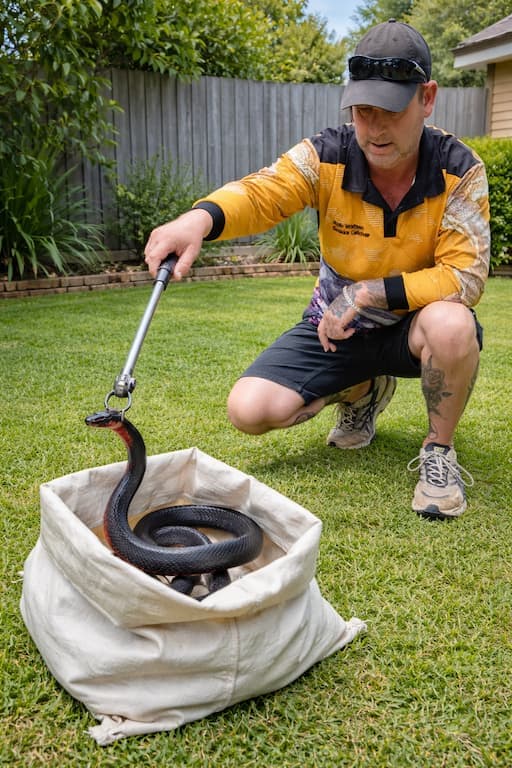
How to Identify a Red-Bellied Black Snake
The red-bellied black snake is one of the easier Australian snakes to identify due to its distinctive colouration. However, visual identification in the field should always be confirmed by a professional. Key identifying features include:
- Upper body: Glossy, jet-black scales across the entire dorsal (upper) surface, with a noticeable sheen in sunlight.
- Flanks and belly: Vivid red to crimson colouration along the lower flanks and belly. The red colour is typically brightest along the edges where the belly scales meet the dark upper body.
- Size: Adults generally measure between 1.2 and 1.8 metres in total length, with some larger specimens recorded up to 2 metres.
- Build: Solid, muscular body that is noticeably thicker than the slender eastern brown snake.
- Head: Slightly wider than the neck, with a rounded snout and moderately sized eyes with round pupils.
- Scales: Smooth, glossy scales that give the snake its characteristic iridescent black appearance.
Juvenile red-bellied black snakes closely resemble adults in colour and pattern, though they may appear slightly duller. They should not be confused with the small-eyed snake (Cryptophis nigrescens), which is also dark-bodied but lacks the vivid red belly colouration and has noticeably smaller eyes.
Habitat and Behaviour
Red-bellied black snakes are strongly associated with water. They are most commonly found near creeks, rivers, dams, swamps, and drainage channels, and are rarely encountered far from a permanent or semi-permanent water source. In Brisbane North, this means they are a frequent sight along the creek systems, river corridors, and wetland areas that wind through suburban neighbourhoods.
This species is diurnal, meaning it is active during daylight hours. Red-bellied blacks are particularly active on warm, overcast days and are often seen basking on sunny creek banks, garden paths, or driveways in the morning. After heavy rainfall, they may move to higher ground or into gardens and yards that border waterways.
When threatened, a red-bellied black snake will typically flatten its body and neck to appear larger, hiss loudly, and attempt to escape. This defensive display is often mistaken for aggression, but genuine strikes are uncommon. They are generally reluctant biters and will go to considerable lengths to avoid confrontation with humans.
Their diet is varied but centres heavily on frogs, which are their primary food source. They also consume lizards, small mammals, fish, eels, and notably, other snakes, including venomous species such as eastern brown snakes. This predatory behaviour makes the red-bellied black an important natural control on brown snake populations in areas where both species overlap.
Danger Level: Venomous but Rarely Fatal
The red-bellied black snake is classified as moderately venomous. While its venom contains myotoxins and coagulants that can cause significant symptoms, fatalities from red-bellied black snake bites are extremely rare in Australia. Most bites result from deliberate handling or accidental contact.
Symptoms of a red-bellied black snake bite may include:
- Localised pain and swelling at the bite site
- Nausea and vomiting
- Muscle pain and weakness
- Headache and general malaise
- In severe cases, blood clotting irregularities
Even though fatalities are rare, any bite from a red-bellied black snake requires immediate medical attention. Apply a pressure immobilisation bandage, keep the patient still, and call 000 without delay. Do not wash the bite site, as venom traces are needed for identification at the hospital.
To learn more about the cultural and ecological significance of this species, read our article on the spiritual significance of the red-bellied black snake.
Where Red-Bellied Black Snakes Are Found in Brisbane North
Red-bellied black snakes are commonly encountered in Brisbane North suburbs that feature creek systems, river corridors, and areas of damp bushland. The following areas are particularly active for this species.
Cashmere
Cashmere features extensive creek systems, including Cedar Creek, and areas of damp, shaded bushland that provide ideal red-bellied black snake habitat. Properties with gardens that back onto creek corridors or retain moisture through irrigation and ground cover regularly report sightings, particularly during the warmer months and after rainfall.
Petrie
Petrie sits along the North Pine River corridor, one of the major waterway systems in Brisbane North. The river and its surrounding riparian vegetation create a natural highway for red-bellied black snakes, and encounters are common on properties near the riverbank, particularly those with frog-attracting features like ponds, pools, and wet garden areas.
Albany Creek
Albany Creek includes multiple waterways and reserve areas that support healthy frog populations, the red-bellied black snake's preferred prey. We regularly attend call-outs in Albany Creek for red-bellied blacks found near garden ponds, swimming pools, and along drainage lines that connect residential areas to nearby reserves.
What to Do If You Find a Red-Bellied Black Snake
If you encounter a red-bellied black snake on your Brisbane North property, follow these steps to keep everyone safe:
- Stop and back away slowly. Give the snake at least several metres of space.
- Keep all people, children, and pets away from the area.
- Do not attempt to catch, corner, or kill the snake. This is dangerous and illegal under Queensland law.
- If the snake is near water (a pool, pond, or creek), keep everyone out of the water until a professional arrives.
- If safe to do so, keep visual contact from a distance so the snake catcher can locate it quickly.
- Call a licensed snake catcher immediately for safe removal and relocation.
For urgent situations, arrange emergency snake removal in Brisbane or contact our 24/7 snake catcher service at any time of day or night.
Frequently Asked Questions
Are red-bellied black snakes aggressive?
Red-bellied black snakes are generally shy and reluctant to bite. When threatened, they will typically flatten their body and neck as a defensive display, hiss, and try to escape. Genuine strikes are uncommon and usually only occur when the snake is deliberately handled, cornered with no escape route, or accidentally stepped on. Compared to eastern brown snakes, red-bellied blacks are considerably more tolerant and less likely to strike.
Do red-bellied black snakes eat other snakes?
Yes, red-bellied black snakes are known ophiophages, meaning they actively hunt and consume other snakes. This includes venomous species such as the eastern brown snake, which makes the red-bellied black an ecologically valuable species in areas where both snakes are present. They also feed on frogs, lizards, fish, eels, and small mammals, with frogs forming the largest part of their diet.
Where do red-bellied black snakes hide in winter?
During the cooler months in Brisbane (typically June to August), red-bellied black snakes enter a state of reduced activity known as brumation. They shelter in deep rock crevices, hollow logs, dense vegetation, underground burrows, or beneath thick garden mulch, usually close to their preferred water source. On warmer winter days, they may emerge briefly to bask in the sun before retreating again. Snake encounters can still occur in winter, particularly during unusually warm spells.
Can red-bellied black snakes swim?
Yes, red-bellied black snakes are excellent swimmers and are frequently seen in and around water. They swim with their head above the surface and can remain submerged for extended periods while hunting aquatic prey such as frogs, tadpoles, and fish. It is not uncommon for residents to spot red-bellied blacks swimming in backyard pools, dams, or creek crossings, particularly in suburbs like Cashmere, Petrie, and Albany Creek.
Need help identifying a snake? Try our snake identification tool or call us directly for professional advice.
Professional Red-Bellied Black Snake Removal in Brisbane North
Robert Watson Snake Catcher provides fast, licensed red-bellied black snake removal across Brisbane North and surrounding suburbs. We understand the habitats and behaviours of this species and respond promptly to call-outs near waterways, dams, pools, and creek corridors. Every snake is captured humanely and relocated to suitable habitat away from residential areas, in full compliance with Queensland wildlife legislation.
If you've spotted a red-bellied black snake on your property, don't take any chances. Call now for safe, professional removal.