Common Tree Snake Brisbane: Identification & Information Guide
The common tree snake (Dendrelaphis punctulatus), also known as the green tree snake, is one of the most frequently seen snakes in Brisbane gardens, parks, and backyards. Slender, fast-moving, and strikingly coloured, this species is completely harmless to humans and is actually a welcome visitor for those who appreciate natural pest control. Common tree snakes feed primarily on frogs, geckos, and skinks, helping to maintain balanced populations of these smaller animals across Brisbane North.
Despite being harmless, tree snakes are still a protected species in Queensland. If you encounter one and need assistance, contact a licensed snake catcher in Brisbane North for advice or removal.
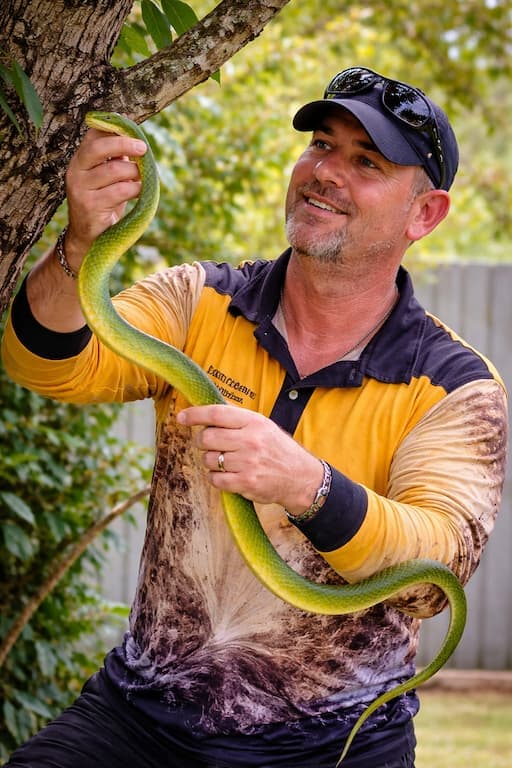
How to Identify a Common Tree Snake
Common tree snakes are one of the more distinctive species found in Brisbane, though their variable colouring can occasionally cause confusion with other species. Here are the key identification features:
- Colour: The upper body ranges from bright emerald green to olive green, golden brown, or occasionally dark grey-black. The belly is consistently bright yellow, which is often the most noticeable feature when the snake is moving through vegetation.
- Build: Extremely slender and lightweight, with a long, whip-like body. This is one of the thinnest snakes you will encounter in Brisbane and looks very different from the heavy-bodied carpet python or the stocky eastern brown.
- Size: Adults typically reach 1 to 1.5 metres in length. Despite their length, their slender build means they weigh very little.
- Eyes: Large, round eyes with prominent pupils, giving the snake excellent daytime vision. This is consistent with their diurnal (daytime) hunting habits.
- Blue tongue: When threatened or stressed, common tree snakes may display a distinctive bright blue tongue. This defensive display is unique among Brisbane's snake species and is a reliable identification feature.
- Scales: Smooth scales with a slight sheen. The skin between the scales may show flashes of blue when the body is inflated during a threat display.
If you are unsure whether a snake is a harmless tree snake or something more dangerous, do not approach it. Use our snake identification tool or call us for assistance.
Habitat and Behaviour
Common tree snakes are highly arboreal and are among the most agile climbers in Brisbane's snake population. They move with remarkable speed through trees, shrubs, and garden foliage, and can cover considerable distances in a short time.
Where they are found
- Garden trees, shrubs, hedges, and dense foliage
- Near ponds, creeks, and water features where frogs congregate
- On external walls and fences while hunting geckos
- Inside homes, usually having entered through open windows or torn screens
- Park land, nature reserves, and green corridors
Hunting and diet
Unlike most Australian snakes, common tree snakes are diurnal, meaning they are active during the day. This is one of the reasons they are so commonly spotted by Brisbane residents. Their primary food source is frogs, which they hunt actively around garden ponds, drainage channels, and moist areas. They also eat skinks, geckos, small fish, and occasionally the eggs of small birds.
Tree snakes are active hunters rather than ambush predators. They move quickly through vegetation, using their excellent eyesight to locate prey. When they catch a frog or lizard, they swallow it alive, as they do not use constriction.
Defensive behaviour
When threatened, a common tree snake's first instinct is to flee, and they do so at impressive speed. If cornered or handled, they may inflate their body to appear larger, display their blue tongue, and emit a strong, unpleasant-smelling musk from glands near the tail. Biting is a last resort and is essentially harmless to humans.
Completely Harmless to Humans
Common tree snakes are non-venomous and possess no fangs capable of harming people. While they are technically rear-fanged (a feature used to subdue small prey like frogs), their venom is ineffective against humans and they cannot deliver it through a bite. There is no medical risk whatsoever from a common tree snake encounter.
That said, common tree snakes are still protected under Queensland's Nature Conservation Act 1992. It is illegal to kill, injure, or interfere with them without a licence, regardless of how harmless they are. Respect them as a native species and allow them to move on naturally, or call a catcher if they are causing concern.
To learn more about the important role snakes play in the local environment, read our article on snakes in the ecosystem.
Where Found in Brisbane North
Common tree snakes are found throughout the Brisbane region, but certain suburbs in Brisbane North see particularly frequent sightings due to the abundance of suitable habitat:
- Warner - newer housing estates that border remnant bushland provide a mix of landscaped gardens and natural tree cover. Tree snakes are commonly spotted in garden trees and around outdoor entertaining areas, drawn by the frog and gecko populations that thrive in newly established gardens.
- Griffin - the proximity of wetland corridors and landscaped green spaces makes Griffin ideal habitat for tree snakes. They are frequently seen near stormwater channels, park ponds, and suburban gardens that back onto retained vegetation.
- Mango Hill - green corridors, parks, and retained vegetation strips through the suburb provide continuous habitat. Tree snakes move freely through these connected green spaces and regularly enter nearby gardens and homes.
We also attend tree snake sightings across the broader Brisbane North area. View our full Brisbane North service coverage for details.
What to Do If You Find a Common Tree Snake
In many cases, a common tree snake does not need to be removed at all. These snakes are harmless, fast-moving, and will usually leave your property on their own within a short time. Here is what we recommend:
- If the snake is outside: Simply observe from a distance and give it space. It will almost certainly move on by itself. There is no risk to people or pets from a tree snake in the garden.
- If the snake is inside your home: Close internal doors to contain it to one room and open external windows or doors to give it an escape route. If it does not leave, or if you are uncomfortable, call a 24/7 snake catcher for assistance.
- Do not confuse it with a venomous species. If you are not confident in your identification, treat any snake as potentially dangerous and keep your distance. Some venomous species can appear superficially similar in certain lighting conditions.
- Keep pets calm. While tree snakes pose no threat to dogs or cats, a curious pet may stress the snake or cause it to release its foul-smelling musk.
Common Tree Snake FAQs
Are tree snakes venomous?
No. Common tree snakes are completely non-venomous and harmless to humans. They are technically rear-fanged, but their mild venom is only effective on tiny prey like frogs and geckos. They pose absolutely no medical risk to people, children, or pets.
Why did a tree snake come inside my house?
Tree snakes usually enter homes accidentally while pursuing prey such as geckos or small frogs. They are excellent climbers and may enter through open windows, gaps in flyscreen doors, or openings around air conditioning units. They do not intentionally seek out human dwellings and will generally try to find their way back out once they realise they are inside.
Do tree snakes bite?
Common tree snakes very rarely bite. Their primary defence is to flee at speed. If cornered, they are far more likely to inflate their body, display their blue tongue, or release a foul-smelling musk than to bite. On the rare occasion a tree snake does nip, it is harmless and unlikely to break the skin.
What's the difference between a tree snake and a green mamba?
This is a common question from Brisbane residents, but the answer is straightforward: green mambas do not exist in Australia. They are an African species found only in sub-Saharan Africa. If you see a bright green snake in your Brisbane garden, it is almost certainly a common tree snake, which is completely harmless. Australia has no mamba species whatsoever. If you are unsure about a snake's identity, use our snake identification tool or call us for help.
Need Help with a Snake? Call Now
Whether you've found a common tree snake inside your home or spotted an unidentified snake in your garden, we are here to help. Robert Watson Snake Catcher provides licensed snake identification, advice, and removal services across Brisbane North.